Metallic Epoxy Floors Explained: Pigments, Pours and the 3D Effect
Metallic epoxy is the showpiece of resin flooring — a swirled, three-dimensional finish that looks like polished stone, molten metal or moving water, poured over an ordinary concrete slab. The effect comes from a simple ingredient used with real technique. Here is what metallic pigments actually are, how the effect is created, and how the system is built so it lasts.
What metallic pigments actually are
Metallic epoxy pigments are fine mica particles coated with metal oxides. Stirred into a clear, 100% solids epoxy, the particles reflect light at different angles and — critically — keep moving while the resin is wet. As the epoxy self-levels, the pigment migrates, settles and swirls, and that movement is what creates the depth. The look is frozen into the film wherever the pigment happens to be when the resin gels, which is why no two metallic floors are alike.
How the effect is created
- Pour patterns — ribboning one or two pigmented colours across the floor and back-rolling once, then letting the material move on its own.
- Blended colours — a dominant colour with an accent (for example Silver Black veined with Pure Gold, or Ocean Blue over a black base) poured wet-in-wet.
- Solvent drops — a light spritz of solvent on the wet surface opens “cells” and craters for a lava or stone look.
- Heat and air — a heat gun or gentle air movement pushes pigment into veins and pops bubbles.
The discipline is knowing when to stop: metallics reward one confident pass and punish endless rework. Over-rolling after the resin starts to build viscosity flattens the pattern into a muddy, uniform sheen.
The build, layer by layer
- Prep and test — grind to the profile the base coat requires (see the CSP guide) and test the slab for moisture. A sealed metallic floor shows blisters mercilessly.
- Pigmented base coat — a solid-colour epoxy base, usually dark, so the metallic coat reads deep and any thin spots don't flash concrete. An epoxy such as Eco-MPE handles priming and base duty.
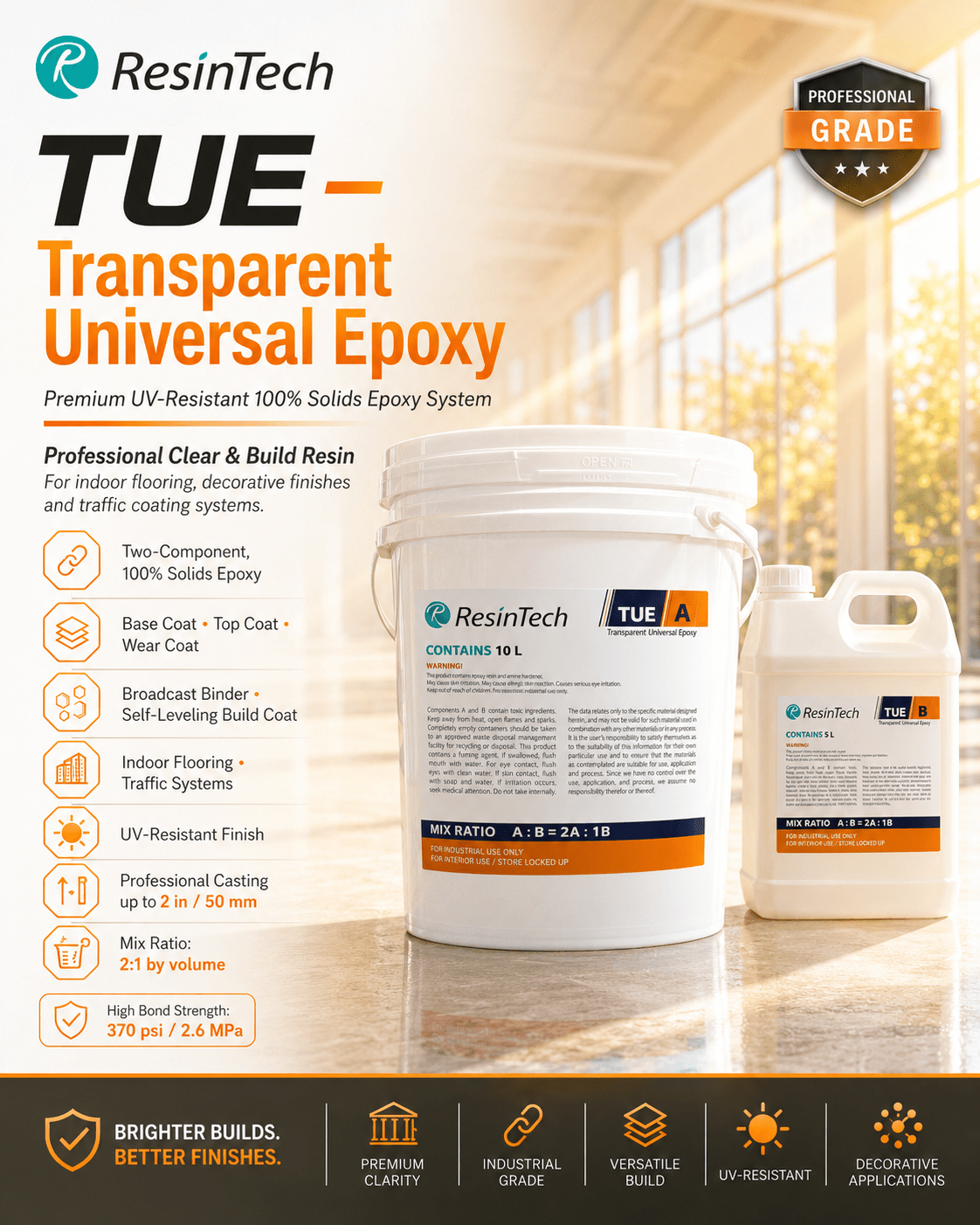
- Metallic coat — metallic pigment mixed into a clear 100% solids epoxy like ResinTech TUE, poured and manipulated at the specified film build. Thin coats produce a weak, patchy effect — respect the coverage on the TDS.
- Clear topcoat — the wear layer. A UV-stable polyaspartic such as ResinTech HPP protects the metallic coat and keeps it from ambering; CRU urethane is the premium option where chemical exposure or maximum scratch resistance matters (see polyaspartic vs epoxy for the chemistry).
Slip resistance: a metallic floor cures glass-smooth. In garages, entries and any wet area, broadcast a fine anti-slip additive into the topcoat — the texture is invisible at standing height but changes the floor underfoot.
Choosing colours
Canopus stocks metallic pigments in colours from subtle to loud — Silver White, Silver Gray and Lily White for bright modern spaces; Coffee, Chestnut Brown and Bronze Brown for warm stone looks; Ocean Blue, Peacock Green, Red Pearl, Magic Orange, Violet and Pure Gold for statement floors. Single-colour floors read as brushed metal; two-colour blends read as marble or flowing water. Always run a sample board — the same pigment behaves differently over different base colours.
Where metallic jobs go wrong
- Moisture in the slab — blisters and craters in the one floor where every flaw is on display.
- Working past the pot life — the pattern stops moving and rework leaves roller marks that never blend out.
- Starving the metallic coat — thin application gives a faint, streaky effect instead of depth.
- Contamination — dust, moisture droplets or silicone cause fisheyes that telegraph straight through the clear coat.
- Epoxy-only clear coats in sunlit spaces — ambering shifts the whole colour scheme. Use an aliphatic topcoat where UV hits (and mind temperature and dew point in cold-season installs).
Where metallics earn their keep
Showrooms, retail floors, restaurants, offices, garages and any space where the floor is part of the pitch. The system is the same proven epoxy-plus-topcoat build as a flake floor — the difference is entirely in the middle coat and the hand of the installer.
Get the metallic stack
Canopus Supply stocks metallic pigments in 16 colours, clear and pigmented epoxies, UV-stable topcoats and the prep equipment to do it right. Local pickup is available in North Vancouver. We deliver across Greater Vancouver and BC, and we ship eligible products across Canada and the USA. For heavy, oversized, special-order, hazardous, or contractor-volume orders, shipping must be confirmed before fulfillment. Call 250-233-3000 or email order@canopussupply.com for colour availability and coverage estimates.
Ready to pour a metallic floor?
General information for professional and trade audiences. Confirm coverage, film builds, pot life, recoat windows and topcoat compatibility against each product's current TDS, SDS and your project specification.
Technical information is provided for professional reference only. Product selection, substrate preparation, installation method, coverage, cure time, system compatibility and final performance remain the responsibility of the purchaser, installer, project specifier and/or manufacturer documentation. Always confirm suitability against the current TDS, SDS, project specification and site conditions before use.